
Dear Reader,
Research has been done in the Netherlands over whether fears about lack of safety of a few years ago have been justified in some places. The article below was published this morning in the Volkskrant about the findings of a huge research done at the behest of the Dutch Research and Documentation Centre of the Department of Justice. The findings are presented in more detail in the Dutch House of Representatives Today.
My translation of the article can be read below. To my mind, it points towards “untruths” given to residents of most Middle-European people by propaganda reporting “neighbourhoods in the city of (you name it) in” Belgium, Sweden, France, Germany, Britain etc, where “locals do not dare to go out into the streets”, “which are ruled by hordes of migrants” and the like, even making bold statements about the Netherlands based on statements and opinions by Gerd Wilders, leader of the second most supported party in the country. Whoever can claim for sure that the Netherlands is an exception from these phenomena are absolved of the burden of reading about the situation there, but others are advised to read the article to learn about the truth. I think the Netherlands is just as representative of the problems as the other countries mentioned above, consequently, these findings may be indicative of the true size of the problems in other parts of Europe.
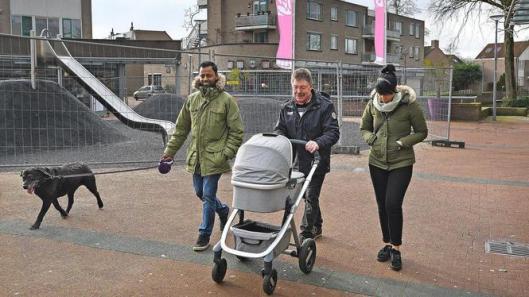
” ‘Robuust’ research proves: Setting up a refugee centre does not lead to less safety in the neighbourhood
The WODC has examined statistical data from the CBS.
Safety in a neighbourhood does not decline after the arrival of a reception centre for asylum seekers. Local residents face no more risk of becoming victims of crime. This is the conclusion of the Research and Documentation Centre of the Department of Justice (WODC) after an analysis of statistical data from Statistics Netherlands (CBS). The results will be presented to the House on Thursday.
By: Marjon Bolwijn, 1 February 2018, 02:00
Fear of insecurity and rising crime three years ago was a major reason for strong protests from citizens in several municipalities where asylum seekers’ centres were planned. In 2014 and 2015 the number of asylum seekers, particularly from Syria and Eritrea, sharply rose. Sometimes citizens’ protests turned into riots and police intervention.
Meanwhile, the influx of asylum seekers has abated and the discussion has been silenced. The question remains whether opponents of a reception centre were right in saying that insecurity would increase. Therefore, the Ministry of Justice asked the WODC to investigate. Conclusion: the chance of becoming a victim of a criminal offence has not demonstrably risen with the arrival of a reception centre for asylum seekers. Researchers have found that there is a difference of 0.03 percent, which is statistically “insignificant”.
‘Rabble-rousing’
‘Robust research, no question’, says criminologist Jan van Dijk of Tilburg University. The results do not surprise him. ‘The vast majority of asylum seekers are keen to make something of their lives. They think ten times before they commit a crime,’ says Van Dijk. In his opinion, the conclusions of the WODC suggest that the protests were ‘a projection of fears’ and ‘rabble-rousing by a political party as the PVV’.
The WODC compared all the inhabitants of Dutch neighbourhoods with and without asylum seekers in 2015, 2010 and 2005. It was also examined whether registered crime in neighbourhoods was higher in years with than in years without asylum seekers in the period 2010-2015. In addition, the researchers compared offender profiles of asylum seekers with those of other population groups.
Safe countries
It is not that no asylum seekers commit offences. Earlier research already showed that mainly light property crimes, such as shoplifting, are involved. Because the safety in the neighbourhood does not demonstrably change after the arrival of an asylum centre, the researchers of the WODC suspect criminal offences committed in the reception centre itself or in a city centre in the wider area will presumably be committed. Two-thirds of the offenders are young men from safe countries in North Africa, for example, who do not have a chance to get a residence permit. ‘Adventurers who have nothing to lose,”says criminologist Jan van Dijk.
Compared to their counterparts of similar age, counterparts of the same gender, and people with low socio-economic status among the Dutch population, asylum seekers are somewhat under-represented in police statistics, also when it comes to sexual crimes. The majority of the offences are committed by young men. ‘If a few thousand people are added, it makes sense that crime will increase, but in absolute terms, we are talking about small numbers’, says Jan Wahideh of the WODC.
The greatest outrage over asylum seekers was felt in de Beverwaard, but there is nothing left of it there
The suffering from asylum seekers that residents of Rotterdam were afraid of at the coming of asylum seekers has not materialised. This is consistent with the findings of the WODC Research Institute. ‘We were stirred up,’ says a resident in the neighbourhood. (+)”
Full article with additional statistics: https://www.volkskrant.nl/4564736
I’ll soon translate the original into Hungarian for those of my former compatriots who do not comprehend the text in English.
by P.S.
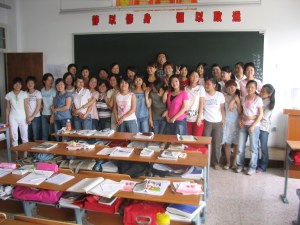 I’ve almost begun this post as most of my Chinese students back then in China began most of their (almost always very optimistic) papers: “In our highly developed, modern society …” But before I completely change my mind, let me begin by saying that in our societies in Europe, it’s more important than before that our children appreciate variety in the world, learn to understand and live alongside various other cultures than their own immediate background. When knives and guns are aimed from left and right at people that others think are ‘different’, meaning ‘strange’, ‘dangerous’, ‘threatening’ and this feeling is sometimes enhanced by the reality that others may actually be that, what can we do? When we think of ‘us’ v. ‘others’, let’s not forget that in such equations, we are ‘others’ to them just like that. And when we think that ‘others’ are dangerous, it means we are dangerous too and then how can we stay alive?
 I’ve already praised the language teaching system that allows immigrating adults to learn Dutch almost free of charge, or at least very cheaply and efficiently. Now I’ve just witnessed workings of a perhaps even more important ground for future peace: a primary school. The bigger kid of the Chinese partner to this post has already been going to school for a year. I’ve often seen kids coming or going to that school and already known that it lies in a ‘mixed nationality’ area of town. This means that probably all nationalities are represented at school, form Moroccans and Turks through Chinese, Indonesians, Thai, Surinamese and Syrians to Somalis and other black Africans. These can be very well seen in the area, but let’s add a probably huge number of Polish and some Hungarian people and we have a real cauldron.
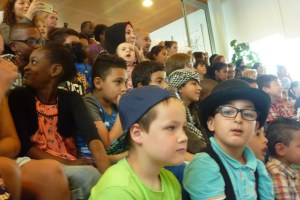 Now, the school finds the original cultures of their kinds also important. We can’t deny that these exist: those parents (or their parents earlier) have come from somewhere else and it’s just natural that mother speaks her mother tongue to her children. The great thing is that the school understands the values embedded in such diversity. Instead of pointing at each others with grins, they are given the opportunity to first take everything around them at face value and accept it – no kid even realizes that some of them have very dark skins, others very white, yet again others different eyes or something – and then at the end of the school year, the school organizes a little festival to bring out the values inherent in the population of the school. This is what I’m going to show you parts below.
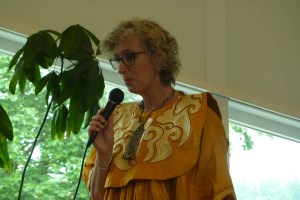 First, it was interesting to hear that the leader of the event found it important to wear a clothes and a piece of jewellery from Somalia. And to tell the kids about it too, and proudly at that.




 Learning and teaching languages in the Netherlands - and taking photos in the process