
Tags
grammar-translation method, Jiaozi, Language, Language education, teaching foreign languages, Translation
Quite recently, I taught English to a Hungarian born in Slovakia, who also speaks German and some Polish, so when he had told me his level in English was around advanced, I believed him and started to deal with him with that in mind. Well, as it turned out, he was anything but. His grammar had a lot to be wished for, he seemed to lack vocabulary, and often seemed to suddenly become very reluctant to speak. It may have been a case of bad chemistry between us, but because we seemed to hit it off really well in our mother tongue, I lowered my expectations of him and waited for results. Then, in the middle of our short course, he admitted that he had studied English with translation at school a few years before. I was very surprised, because I know a few colleagues from Slovakia who really avoid this method. I tried to give him more help with what to say, but with the short time on our hands, he developed very little in fluency.
Although he knew his profession and the vocabulary for it in English well, he fell short when it came to discussing topics loosely related to it, sometimes even when closely related. His thinking processes were seriously impeded and prevented him from talking about what he knew well. He represented a huge failure of the ‘grammar-translation method‘. It’s because of this experience why I’ve decided to try and summarize some of my ideas about the deficiencies of this method.

Translation Process (Photo credit: Wikipedia)
My ideas are not based on research, only on experience and the common sense of a teacher and language learner. I’m unwilling to completely dismiss this method, I was originally brought up into the English world through this method, and I understand the need of learners to resort to ‘what does this word mean’ from time to time. I still use dual-language dictionaries as well as the single-language Dutch dictionary on B2 level. But I’m not as flexible of mind as a young learner either. I believe, as a learner and as a teacher as well, that the sooner someone gets rid of the shackles of translation towards speaking a new foreign language the better. It reduces the time of understanding others and expressing ourselves greatly, and anyway, imagine what level of proficiency it would require to constantly translate while listening to the 200-words-per-minute prattle of some Italians, Chinese or Dutch speakers.
In normal language, on a beginner’s level, where we meet mostly factual vocabulary, translation may be applied. A ‘table’ is ‘tafel’ in Dutch, ‘asztal’ in Hungarian, ‘桌子’ (zhuōzi) in Chinese, just like a ‘man’ is ‘man’ in Dutch, ‘férfi’ in Hungarian, or ‘人’ (rén) in Chinese. These are easily translatable, so my guess is that this is why those insisting on the grammar-translation method may keep using it and honestly believing that this is good basis for its application. However, because this is the case with lots of factual, palpable language, they should be aware that for exactly the same reason, that is, palpability, factual language lends itself most easily for doing exactly the opposite in class: we can avoid translating concrete words simply by pointing at them and forming a new habit in learners of using a new name for familiar objects, thereby saving a lot of precious thinking time on word level. Language, and most notably names of objects are the result of consensus, so the task of the teacher is simply to create a new consensus about the naming of things and stuff. Once the consensus is firmly built, thinking and speaking will speed up considerably. I consider this to be a very important aspect of foreign language teaching because it gives invaluable confidence to the learners and a solid basis for further development.
There are sometimes difficulties even at this level though. Let’s remember the classical example of the forest. Can we all understand what kinds of different perceptions this word evokes in the middle and west of Europe compared to Siberia, the mangroves of the south of the USA, or the bamboo forests of south Asia? Or in rain forest regions, for which English has the good sense to use ’jungle’. But then again, how can Portuguese learners of English in Brazil really grasp the word ’forest’ if not with a lot of photos? I bet that quite a lot of other object-words carry similar difficulties, some of which are ‘music’ (what differences in the world! compare classical, rock, pop, classical Chinese or Indian, or Arabic or African), ’church’ (try to explain a gothic one in France or England to Latin-Americans or Muslims), ’house’
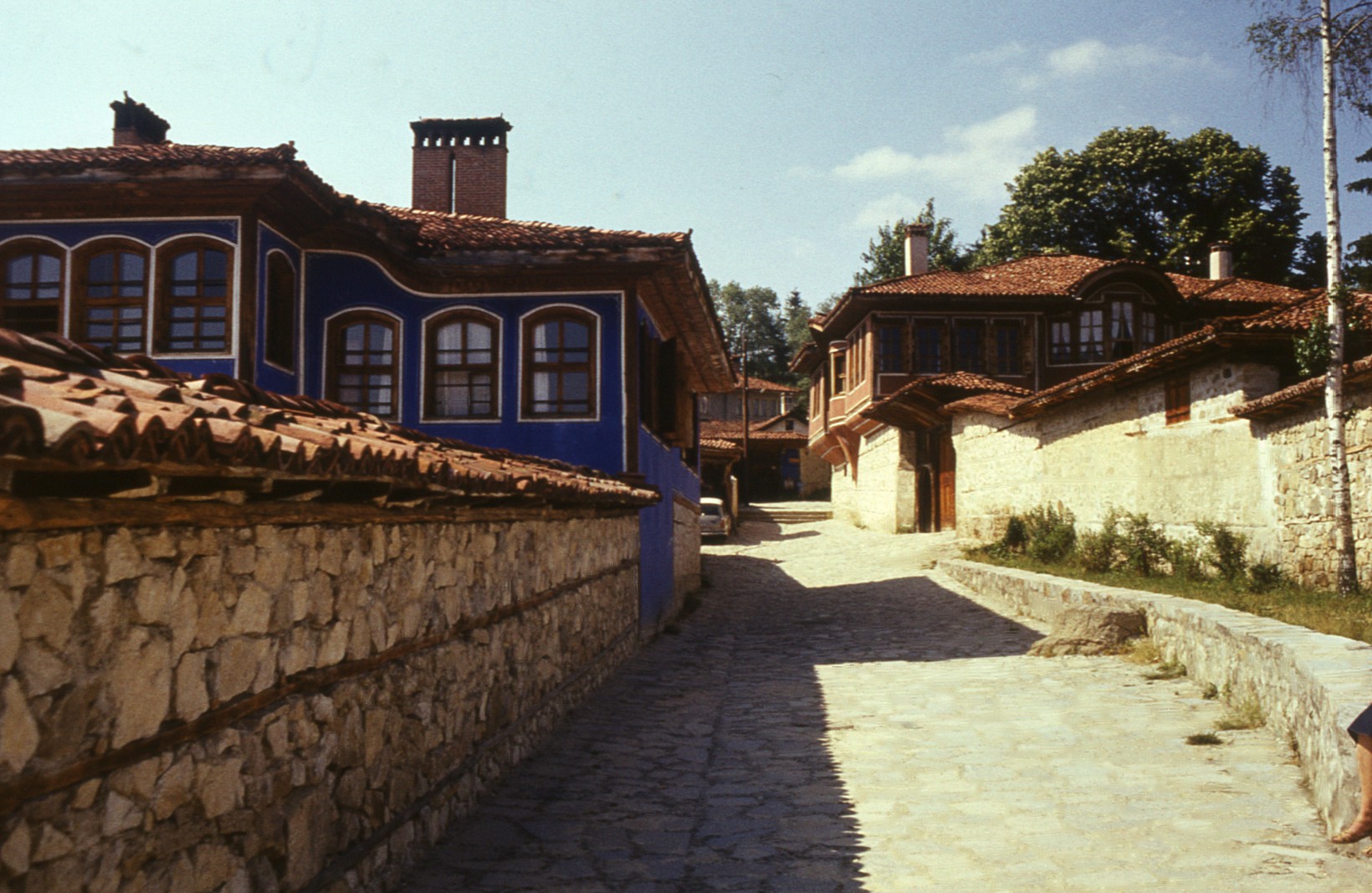
Houses in Koprivstica, Bulgaria

Houses in Szentendre, Hungary

Historical houses in Riga, Lathvia

Windows on a Chinese house, Dongshan
(compare the differences between mediterranean houses with the upper floors being the widest, a ’normal’ West-European house with several floors and a one-floor building in Eastern-Europe or Africa), ’fireplace’ (made of what? what shape?), ’horse’ (the heavy Irish or middle-European plow-horses, or the race-horses of the Arabs and anything in between), ’telephone’ (which is fast becoming obsolete), or ’window’, which reminds me of the time when a Chinese host suddenly realized in the middle of winter that they had no glass on their windows — glazed windows simply don’t exist like that in that area, there is complicated and carved old latticework instead of the open space in the wall to let in light and air.

Slovakian dumplings
A special non-translatable category of words consists of nouns denoting things non-existent in the target language culture. A large section of food vocabulary belongs here. You can’t translate the Hungarian ‘pogácsa’, or ‘főzelék’, or the now omnipresent ‘curry’ to other languages as the things don’t exist elsewhere. A favourite with me are ‘饺子‘ (jiǎozi) and ‘包子‘ (bāozi) in China. Before I was given them for the first time (and sometimes even afterwards), people speaking some English tried to convince me that I would be given ‘dumplings’. Being a Hungarian, I have a very strong sense of our ‘dumplings’, which are quite different from the English kind, so I asked if they were sweet, contained milk-curd or something, cooked in boiling water and then covered

Shaomei, a kind of jiaozi in Beijing
with breadcrumbs and sugar, and they were very surprised, saying no, none of those, and especially when I said that then theirs were not dumplings at all, because dumplings are all the above. I call that kind of food ‘jiaozi’ and ‘baozi’ for want of anything better, and especially because they are also very different from each other. At this point we should also remember that there were reasons why lots of languages picked up ‘loan-words’ from other languages, and not only in the field of food. Just a short list in English should include ‘igloo’, ‘wigwam’, ‘mosque’, ‘kangaroo’, ‘cockatoo’ (from Malay through Dutch), ‘tobacco’ (from Spanish), or ‘biro’ and ‘coach’ (the wagon, not the trainer), both, strangely, from Hungarian.

in the Durmitor mountains in Bosnia
Some adjectives may also carry the danger of misunderstandings. What I may mean by, for example, ’tall’, ’high’, ’long’, ’wide’, ’fast’, ’big’, or their opposites and the like, may seriously be misunderstood elsewhere, depending on the original surroundings of my listener. Can we always rely on experience from the media for a Dutch child to understand what is meant by high mountains, when the highest point in the Netherlands is around 400 meters above see level? Of course, on beginners’ level, it’s not a source of concern for the teacher – he/she just translates and relies on the original notions of the pupils. Is that always right?
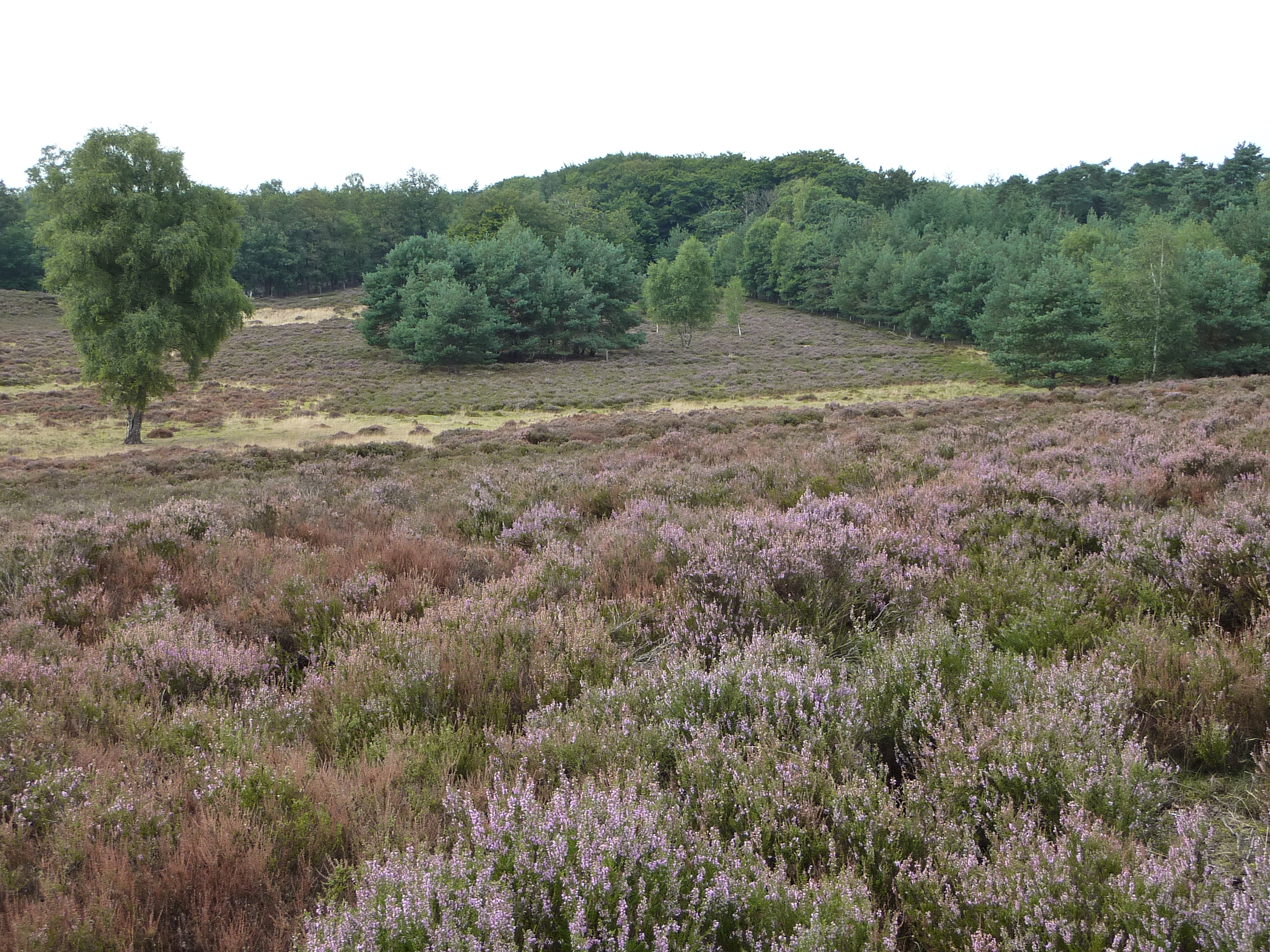
high ground and forest in the Netherlands
Abstract nouns obvously have an even greater chance of carrying differring fields of meaning, but also obviously, most teachers of lower levels of a foreign langauge neglect such possibilities simply for the sake of simplicity, and rightly so up to higher levels, when, however, high achievers may suddenly face the strange fact that their mental pictures should often be re-evalutated. But if they have never used methods of understanding other than translation, how can they grasp explanations that also obviously suddenly require explanations in the target language? And this was only the level of words.
The fact that in lots of languages, simple words can also converge to form compound words makes the translation process a lot more complicated, however. How can we understand that if the Dutch speak about ‘doodslag’, they actually mean ‘manslaughter’? Where is ‘man’ in this compound word when ‘dood’ actually means ‘dead’? In the Chinese ‘杀人’ (shārén) the order of the compound is opposite to that in the English compound, ‘man’ being the second member, and the Hungarian ‘gyilkosság’ has nothing to do with the word for a person, but is a reference to the murderous object. Both of the two latter words omit the aspect present in English, that is, that the action was not premeditated. The jargon of law has a word for it, but it’s not used much in ordinary language. It would also be un-expertly overdoing it if one translated ‘szándékos emberölés’ to be ‘premeditated murder’, ‘murder’ being enough to express the intention.
The fact that the English-Chinese dictionary omits the word ‘manslaughter’ may represent a lamentable omission from “The World’s Most Trusted Dictionaries” by Oxford, but I also suspect that the Chinese may not make a difference between pre-meditated and incidental homicide. They may think perpetrators of both deserve to die. Which is already a cultural issue, the enormous impact of which could take up volumes about language use. I guess that in a country where language teaching is still seriously influenced by the teaching of Latin and Ancient Greek as it is in the Netherlands, culture may not be at the forefront of teaching considerations. Who knows exactly what the ordinary culture and language of the Latins or Greeks was, one and a half thousand years after they became extinct, from writings of ancient members of the upper classes? Ask a Hungarian teacher of Latin for comparisons …
All this already illustrates the point well that translation is often difficult directly to be done even on the level of what most people call words, usually from the level of compound words upwards. It regularly happens, however, when we try to translate idiomatic language, or proverbs, so I’m going to present, in my following post, a small collection of such problems, mostly between Dutch and English, as I suppose most of my readers don’t really want comparisons with Hungarian or Chinese, and some of my readers may come from the Netherlands anyway. We may suppose that similar examples may be derived in comparison with German too. My readers who speak German would like to add their own such examples, but I don’t speak German myself.
Before I go on to the list of examples, I’d also like to point to the fact that on the level of sentences and texts even much more difficulties and differences exist. Whoever tries to translate sentences to Russian, French, or Hungarian, for example, or to other languages using inflexion heavily, is up to a very big task, especially if they try to use translation software. In very many cases, the teacher has almost no recourse even for grammatical explanations, mostly to learners of languages, like Chinese, in which even most of the grammatical categories do not exist — a word in Chinese may usually stand in the role of noun, adjective or adverb, often even that of verb. The grammar method also almost breaks down with languages using inflexions heavily, like with Hungarian, that express several dozens of aspects mostly inexpressible in grammatically simple languages like English, Dutch, or Chinese.
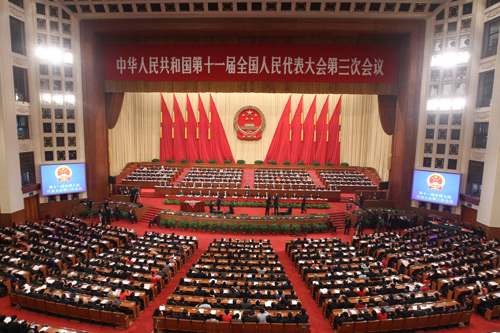
Chinese Parliament
And once again, we still haven’t mentioned most differences coming from the cultural point of view, which lead lots of Chinese learners to be non-plussed by the ideas around ’elections’, ’parliament’, ‘representative’, and the like. When they push for a translation (the dictionary contains these words, after all), they don’t realize the world of difference between what is meant by the original and the translation.

British Parliament
With this and the following post I wouldn’t like to redeem the profession of language teaching, or the worlds of language learners. But I do hope that I may cause a shift away from the situation of my sorry student from Slovakia and similar learners who can’t learn to speak a second language well because of the exclusive use of grammar and translation.
There are a lot of different Methods-of-language-teaching (downloadable), like the direct method, the audiolingual method, community learning, total physical response, the communicative method, or the lexical approach, which may be far preferable. Role-play may also be regarded as almost a method, at least an approach to letting learners learn from their own behaviour. I recommend a good article about role-play here.
See my next post with examples if you’re interested. You can read about the grammar side of this approach in a later entry here.
By P.S.
 Learning and teaching languages in the Netherlands - and taking photos in the process