• Privacy policy
  • Translator – ProZ.com Pro member
  • About

Learning and teaching languages in the Netherlands – and taking photos in the process

~ A fine WordPress.com site

Learning and teaching languages in the Netherlands – and taking photos in the process

Tag Archives: Hungarian

A famous literary mistranslation between Hungarian and German

23 Saturday Feb 2013

Posted by ZJShen-PSimon in translation

≈ 4 Comments

Tags

Frigyes Karinthy, German language, Hungarian, Translation

Karinthy Frigyes

Karinthy Frigyes (Photo credit: Wikipedia)

I’d like to present here an artistic mistranslation from the 1910’s which is very famous in Hungary. It was originally written by F. Karinthy, a famous, witty Hungarian poet and writer of lots of short stories and sketches and a famous novel. He took a stanza by a great poet, E. Ady, and followed the ways of translations through a few rounds of misinterpretation. The English is my explanations to the original poems based on Karinthy’s original explanations. I hope that the full piece can be appreciated by those speaking German even if they don’t understand the Hungarian.
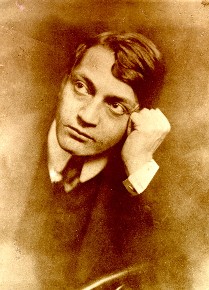
Ady Endre, Hungarian poet

Ady Endre

Jöttem a Gangesz partjairól 
Hol álmodoztam déli verőn
 
A szivem egy nagy harangvirág
 
S finom remegések az erőm.

Which means, roughly, the following:

I’ve come from the shores of the Ganges Where I was day-dreaming in the midday sun My heart is a large blue-bell And fine trembles are my strength.

A translator with a flair for beauty read this in an anthology and was deeply moved. He dicided to translate it and send it to the paper called “Dichterstimmen”.

So he translated it thus:

Ich kam von Ufer der Ganges 
Dort traumt ich von südischen Schlager
 
Main Herz, du Blume, du banges
 
Du bist so zitternd, so mager.

Well, for the sake of rhymes, one changes a thing or two in such a poetic translation.

At this point, Karinthy does not add explanations for the misinterpretations, because he could be sure that his Hungarian readers at the time all understood the differences. For the sake of my readers here, I venture to add a few points:

Although the word ’verő’ could mean ’Schlager’, yet, the poet meant a shortened and well-known form of ’verőfényes’, which is an adjective meaning something like ’brightly sunny’, and the short form can refer to the time of day characterized as such, as can the noun form ’verőfény’ as well. Further, unfortunately, ‘déli’ here is not supposed to refer to the southerly direction as in ‘südischen’, but to the midday. Thus the ‘bright midday sun’ becomes ‘southern hitter’ in the translation. ’Banges’ is supposed to rhyme with Ganges, unfortunately, the original has nothing to do with being ’anxious’. It spells a bigger problem that, according to the original, the poet’s trembling is his power, just the opposite of any meaning of ’mager’.

Well, so far so good, or not. But the problem got bigger when another translator read the German version without realising that it had been translated from Hungarian. He thought it to be an original poem and so translated it to Hungarian and sent it along to a literary journal like this:

Ufer, a zsidó kupléíró 
Aludt a folyosó mélyén
 
Barátja, Herz, biztatta
 
Hogy ne remegjen, ne féljen.

There’s an undoubted misunderstanding here, but who can fully find his way among those strange Gothic letters (at the time still widely used in Germany). So it is no wonder that the otherwise excellent translator misread „südischen” to be „jüdischen” and turned the name of the river Ganges to be a corridor.

There wouldn’t have happened a bigger problem if a third, otherwise excellent, translator didn’t happen to read it, who then translated it and sent it to „Gedicht-Magazin”, in full artistic reformulation:

O, Dichter der alten Juden 
Was schlafst du im FluBsalz so tief?
 
Hörst du nicht den stolzen Herzog
 
Der dir in Ohren rief?

Well, as to the corridor, it is true that if one is a German translator, he can’t be fully held accountable for the slight difference in Hungarian between ’folyosó’ and ’folyó só’ – corridor and fluid salt respectively. Besides, the translator supposes the proper name ’Herz’ to be an abbreviation for ’Herczeg’, ’Herzog’ in German, meaning a duke.

The magazine duly accepted the originality of the poem without further investigation and published it. That’s how it got into the hands of the fourth translator, who then published the poem, which rose to world fame in the meantime, as follows:

A Herz-féle szalámiban 
Sokkal sűrűbb a só,
 
Mint más hasonló terményekben
 
Hidd el, ó nyájas olvasó!

Which means roughly the following:

In the Herz-salami Salt is a lot denser Than in other produce, Believe me, oh kind reader.

He was right that ’Dichter’ can be translated to be ’denser’ just as ’poet’ from German.

Apart from smaller modifications that duly suit a poetic translation, like calling on the kindly reader in the last line, this translator, otherwise, did not change much of the content of the poem.

… he probably even obliged to gratitude the famous Hungarian manufacturer of salami, who, we hope, duly expressed his gratitude.

Moral: always check the source of the source of the source. If somebody has done it, it doesn’t mean it is good.

I owe my gratitude to the following source for the original work, where those who would like to read Karinthy’s original in the original can do so:

Karinthy Frigyes: Műfordítás

by. P.S.

Related articles
  • The evolution of the translation (kishajnalka.com)

ProZ.com Pro translator

Recent Posts

  • News about Learning with Duolingo April 10, 2025
  • Treasures of Austria – lesser known towns and cities, churches etc.: Schallaburg October 11, 2024
  • Treasures of Austria – lesser known towns and cities, churches etc. – Sankt Pölten October 5, 2024
  • Treasures of the Thaya valley in Niederösterreich – Raabs an der Thaya, Schloss Raabs September 22, 2024
  • Treasures of the Thaya valley in Niederösterreich – Burgruine Kollmitz September 20, 2024
  • Changing direction September 16, 2024
  • Learning Languages with Duolingo – extra no.2 June 22, 2024
  • Learning Languages with Duolingo – extra June 19, 2024
  • Learning Languages with Duolingo April 21, 2024
  • Language teaching (?) March 28, 2021
  • And the First Prize in Chinglish Goes to… July 8, 2020
  • Statistical truth about problems caused by asylum seekers in the Netherlands February 1, 2018
  • In honour of the immigrant 2 April 20, 2017
  • In honour of the immigrant 1 April 17, 2017
  • Can something, anything, be more stupid? December 14, 2016
  • Intercultural life in the Netherlands June 6, 2016
  • Good books to learn from May 22, 2016
  • Teach Dutch to refugees January 17, 2016
  • Arnhem’s cultural week and the famous Dutch railways September 12, 2015
  • Hilarious Hungarian-English mistranslation June 19, 2015
  • Cello concertos almost forgotten June 1, 2015
  • Send Dutch applicants … no. 2 March 13, 2015
  • Eastern-European views on the Netherlands November 23, 2014
  • Everywhere … October 16, 2014
  • Chinglish, or Dunglish? June 9, 2014
  • English testing issue in Hungary May 13, 2014
  • Effect of Grammar Teaching on Learners and Translators April 4, 2014
  • Neurobiologist on the brain development of children – part 3 March 28, 2014
  • Neurobiologist on the brain development of children – part 2 March 26, 2014
  • Neurobiologist on the brain development of children March 25, 2014
  • The extent translation is ‘correct’ March 14, 2014
  • Translating using translation software January 19, 2014
  • Translation problems with machine translation January 13, 2014
  • Translation difficulties January 11, 2014
  • Translation in the extreme November 16, 2013
  • Life is looking up at long last October 4, 2013
  • Summer disappointment on the Dutch job market August 2, 2013
  • Send Dutch applicants abroad back home! June 21, 2013
  • What Teacher Education Programs Don’t Tell You June 10, 2013
  • Werkloos = waardeloos, i.e., jobless = worthless? May 27, 2013

Enter your email address to follow this blog and receive notifications of new posts by email.

Join 55 other subscribers

Archives

Categories

  • applying for a job in the Netherlands (2)
  • Austria (5)
  • Austria (1)
  • castles in Austria (3)
  • child development (4)
  • child rearing (3)
  • Chinese speakers of English (2)
  • Dutch culture (4)
  • education (17)
  • English teaching (29)
  • European Union (5)
  • foreign language teaching (19)
  • Hungary (6)
  • immigration (8)
  • intercultural learning (1)
  • job application (1)
  • joblessness (2)
  • language courses for Dutch people (1)
  • language courses for Hungarians (1)
  • language learning (33)
  • language teaching (22)
  • language testing (5)
  • learning Chinese (1)
  • learning Dutch (4)
  • learning languages with DuoLingo (1)
  • museums (1)
  • nature photos (1)
  • Netherlands (12)
  • Nieder-Österreich (3)
  • refugees in Europe (4)
  • River Thaya (3)
  • teacher training (7)
  • teaching Dutch (1)
  • translation (12)
  • university education (4)
  • work in Dutch education (6)

Meta

  • Create account
  • Log in
  • Entries feed
  • Comments feed
  • WordPress.com

Blog Stats

  • 23,549 hits

Spam Blocked

59,628 spam blocked by Akismet

Categories

applying for a job in the Netherlands Austria castles in Austria child development child rearing Chinese speakers of English Dutch culture education English teaching European Union foreign language teaching Hungary immigration intercultural learning job application joblessness language learning language teaching language testing learning Dutch museums Netherlands Nieder-Österreich refugees in Europe River Thaya teacher training teaching Dutch translation university education work in Dutch education

appreciation of variety Austria British Council Bulgarian castle ruins in Austria castles castles in Austria CELTA China Chinese language cognitive science Common European Framework of Reference for Languages Culture of Hungary duolingo Dutch Dutch as a foreign language Dutch dictionary Dutch people Eastern Europe education education in the netherlands English as a foreign or second language English language European Union freedom in class Frigyes Karinthy German German language grammar-translation method Grammar translation Great Britain Hearing (sense) Higher education higher education in Hungary Hungarian Hungary IELTS Immigration Jiaozi Language Language acquisition language correction approaches Language education language learning Learning learning to communicate limits in class mistranslations Netherlands Niederösterreich NRC Handelsblad Romanians Rote learning Schallaburg Secondary education Second language Staatsexamen Student talent Teacher Teacher education teacher training Teaching English as a foreign language teaching foreign languages Teaching qualification tests Thaya Thaya river Training Translation travel use of translation softwares Van Dale Western Europe work in the Netherlands
  • Katsness's avatar
  • Aid To Stop Smoking's avatar
  • Unknown's avatar
  • CRAZY ART's avatar
  • thanefurrows's avatar
  • Unknown's avatar
  • Sofia's avatar
  • Unknown's avatar
  • rrcmrt's avatar
  • Unknown's avatar
  • Unknown's avatar
  • The MIND of RD REVILO's avatar
  • Blake's avatar
  • TGM's avatar
  • Unknown's avatar
  • Unknown's avatar
  • Ido Lanuel's avatar
  • Miss Benison's avatar
  • Unknown's avatar
  • Tony Gurr's avatar
  • Unknown's avatar
  • Unknown's avatar
  • Unknown's avatar
  • Bogdan Marius Beleuz's avatar
  • Unknown's avatar
  • Unknown's avatar
  • nisbetkara's avatar
  • Unknown's avatar
  • Unknown's avatar
  • Unknown's avatar
  • Unknown's avatar
  • Unknown's avatar
  • Unknown's avatar
  • Unknown's avatar
  • Unknown's avatar
  • Unknown's avatar
  • Unknown's avatar
  • iGameMom.com's avatar
  • Unknown's avatar
  • Unknown's avatar
  • Unknown's avatar
  • Unknown's avatar
  • robert okaji's avatar
  • Unknown's avatar
  • Unknown's avatar
  • Unknown's avatar
  • Unknown's avatar
  • loolittleloo's avatar
  • Unknown's avatar
  • sonypadickal's avatar

Top Posts & Pages

  • News about Learning with Duolingo
  • Treasures of Austria - lesser known towns and cities, churches etc.: Schallaburg
  • Treasures of Austria - lesser known towns and cities, churches etc. - Sankt Pölten
  • Treasures of the Thaya valley in Niederösterreich - Raabs an der Thaya, Schloss Raabs
  • Treasures of the Thaya valley in Niederösterreich - Burgruine Kollmitz
  • Changing direction
  • Learning Languages with Duolingo - extra no.2
  • Learning Languages with Duolingo - extra
  • Learning Languages with Duolingo
  • Language teaching (?)

Protected against copying

Protected by Copyscape DMCA Takedown Notice Search Tool

Blog at WordPress.com.

Privacy & Cookies: This site uses cookies. By continuing to use this website, you agree to their use.
To find out more, including how to control cookies, see here: Cookie Policy
  • Subscribe Subscribed
    • Learning and teaching languages in the Netherlands - and taking photos in the process
    • Join 55 other subscribers
    • Already have a WordPress.com account? Log in now.
    • Learning and teaching languages in the Netherlands - and taking photos in the process
    • Subscribe Subscribed
    • Sign up
    • Log in
    • Report this content
    • View site in Reader
    • Manage subscriptions
    • Collapse this bar
 

Loading Comments...